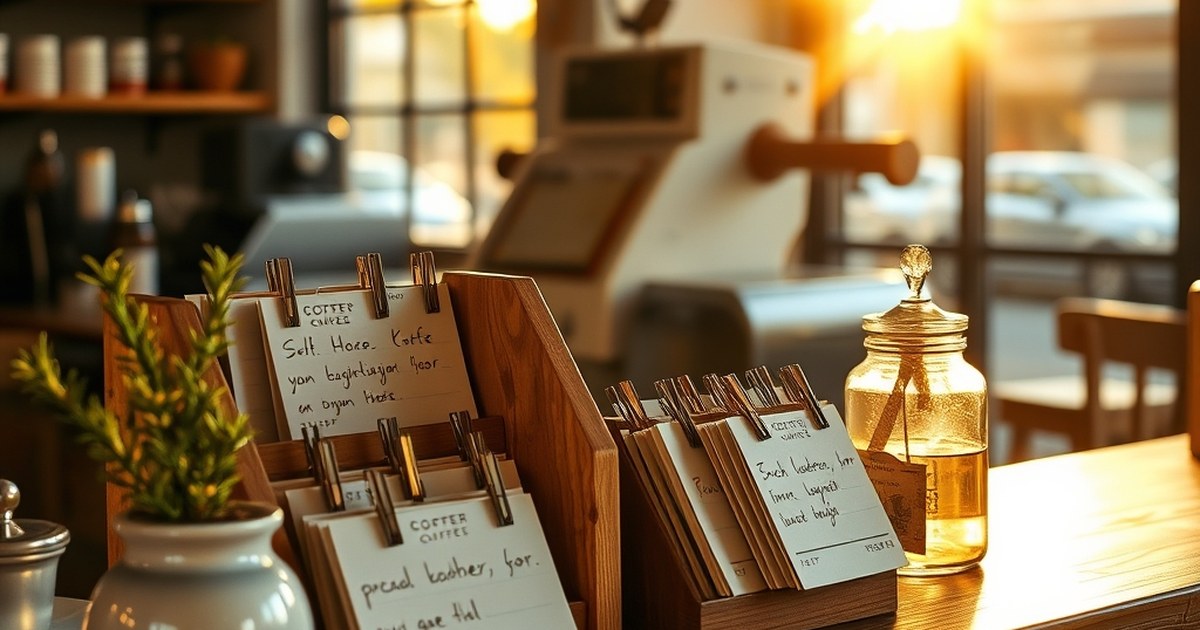

Ask any independent shop owner what keeps the lights on, and you’ll get the same answer with slightly different words: it’s the regulars. The couple who pop in every Saturday. The office manager who orders the same catering trays twice a month. The teenager who’s been buying birthday cards from you since primary school. So when someone asks is a customer loyalty program worth it for a single location shop, the honest answer isn’t yes or no — it’s it depends on whether you already understand who those regulars are. This post walks through the maths, the formats that actually fit a one-shop business, and the mistakes that quietly kill these schemes before they get going.
What a Loyalty Program Actually Does for a One-Shop Business
A customer loyalty program is any structured system that rewards repeat purchases. Punch cards (“buy nine, get one free”). Digital points that stack up in an app or on a POS profile. Tiered VIP levels where big spenders unlock perks. Referral perks that pay existing customers for bringing new ones. Different mechanics, same underlying job.
Single-location shops behave nothing like chains, though. Your catchment is smaller. Word-of-mouth carries more weight than any billboard. Margins are usually tighter, which means every discount you hand out has to earn its keep. That changes what a good loyalty program looks like.
The real goal isn’t the scheme itself. It’s making the roughly 20% of regulars who drive 80% of your revenue feel seen. A punch card is just the wrapper. What’s inside is recognition.
The Numbers Behind the Question
The most-cited stat in this space comes from Bain & Company’s Fred Reichheld, who found that increasing customer retention by 5% can lift profits by 25–95%. You can read the original write-up on the Harvard Business Review site. It’s old, it’s holding up.
Acquisition is where the money bleeds. For a local shop, pulling a new face through the door via paid social or leaflets often costs five to seven times what it costs to bring an existing customer back for one more visit. A loyalty program shifts a bit of that spend from acquisition to retention — which is almost always the better trade.
A quick back-of-napkin sketch: imagine you have 40 regulars. A modest program nudges each of them into one extra £15 visit per month. That’s £600 a month. £7,200 a year. From 40 people. No new customers required.
Now the honest downside. If your rewards are too generous, you erode margin on purchases people would’ve made anyway. A “20% off everything, always” card is a discount, not a loyalty program. That’s a critical distinction most small shops get wrong.
Signs Your Shop Is Ready for One (and Signs It Isn’t)
Before you sink a weekend into designing punch cards, check where you actually stand.
| Ready to launch | Not yet |
|---|---|
| Repeat customers already exist without being asked | You’re still fighting for a steady weekly footfall |
| Your POS can track individual customer profiles | Cash-only, no way to capture who bought what |
| Staff know regulars by name and preference | Team turnover is high and no one owns the customer relationship |
| Product quality is consistent visit-to-visit | Quality still varies and complaints are common |
| Gross margins sit comfortably above 15% | Margins under 10% — a reward scheme would sink you |
Quick tip — if you’re not sure, launch the smallest possible version first. A single punch card with ten stamps costs about £30 in printing and zero in software. Run it for 90 days. If regulars start asking about it, you’ve got a real signal. If nobody cares, you’ve lost £30 and a weekend, not a year.
Loyalty Program Formats That Fit a Single Shop
Not every format suits every shop. Here are the four that actually make sense for a one-location business.
1. Punch card
Setup cost: under £50. Effort: low. Ideal for: cafés, bakeries, barbers, nail salons — anywhere with a small, repeatable purchase. Cheap and cheerful, but easy to lose and impossible to track.
2. Digital points via POS
Setup cost: £0–£40/month depending on your till software. Effort: medium at first, low once staff learn it. Ideal for: most shops with a modern POS. This is what we’d recommend for most single-location businesses because it captures customer data automatically.
3. Tiered VIP
Setup cost: modest, but conceptually heavier. Effort: high — you need clear rules and staff who can articulate them. Ideal for: shops with a clear split between casual buyers and big spenders (boutiques, wine merchants, specialty retailers).
4. Referral-based
Setup cost: near-zero. Effort: low. Ideal for: services and higher-ticket items where a personal recommendation lands harder than a display ad. Works brilliantly alongside one of the above rather than as a standalone.
How much should I spend to launch one?
For a single-location shop, expect to spend £0–£200 in software and setup for a lean digital points programme, plus five to ten hours of your own time briefing staff and drafting the rules. Anything more than that is over-engineering for a first attempt. Test, learn, then invest more once you’ve seen genuine repeat behaviour shift.
Common Mistakes That Kill Small-Shop Loyalty Schemes
Most schemes don’t fail because the idea was wrong. They fail because of one of these:
- Over-discounting. A 20%-off-every-purchase card isn’t loyalty, it’s a permanent price cut. It teaches customers to expect the discount, not to feel rewarded.
- Unclear rules. If your team can’t explain the programme in one sentence, customers won’t understand it either.
- No staff buy-in. If the till operator doesn’t mention the card at checkout, the programme is invisible.
- Ignoring the data. Once digital points capture visit frequency and basket size, actually read the reports. Don’t just collect them.
- Launching without a reason to return. The reward has to be genuinely wanted. A free coffee after nine visits works because people want coffee. A “free branded keyring” after nine visits works for nobody.
If discounts feel wrong for your brand, you’re not alone — there’s a whole school of thought around building customer loyalty without discounts that leans on recognition, exclusivity, and small acts of care instead.
Do loyalty programs really change customer behaviour?
Yes, but modestly and only when designed well. Behavioural research from Kellogg’s Joseph Nunes and others shows that customers push harder to complete a reward when they feel closer to earning it (the “endowed progress effect”). Translation: a card that starts with two stamps already filled outperforms an empty ten-stamp card. Small design choices matter more than the size of the reward itself.
Quick tip — the reward has to feel earned, not automatic. Regulars want recognition; freebies handed out to anyone with a pulse dilute that feeling instantly.
How Mindshelves Thinks About Loyalty for Small Shops
Mindshelves writes for small business owners who want practical, research-backed advice — not vendor pitches dressed up as blog posts. Every retention article on this site starts from the same place: real owner stories, real numbers, honest trade-offs.
If you want to go deeper, we’ve reviewed the best customer retention software for solopreneurs under £50 so you don’t have to sit through a dozen sales demos. And if your instinct is to keep things free and lean, our guide on how to build a loyal customer base without spending money is probably the better starting point.
The Mindshelves library isn’t just about loyalty schemes — it covers customer retention, small-business strategy, and communication, so you can borrow ideas from adjacent topics without paying for a course.
Your Next Step If You’re on the Fence
Three steps, in order:
- Audit your regulars. Write down who they are, how often they come in, and roughly what they spend. If you can’t name 20, the loyalty programme isn’t the priority — building the relationship is.
- Pick the simplest format. For most single-location shops, that’s a digital points programme through your existing POS. Punch cards work fine as a first-week test.
- Run a 90-day trial. Set one clear metric before you start (repeat visit rate, average basket size, or referrals). Review it at day 90. Keep, tweak, or scrap.
Waiting for the “perfect” loyalty programme is the enemy of shipping one. The best small-shop schemes are almost always version three of something that started clunky.
If you want a second pair of eyes on your shop’s setup or a specific idea before you launch, Contact us today and tell us what you’re working with — we read every message, and small-shop retention is exactly the kind of topic we like getting into. A loyalty programme won’t turn a struggling shop around, but for a decent one with real regulars, it’s usually the cheapest growth lever you’re not pulling yet.